
8 Best MTB Cycle Computers of 2025
This post contains affiliate links. As an Amazon Associate, we earn from qualifying purchases.
Many mountain bikers struggle to find a reliable MTB cycle computer that delivers accurate GPS tracking and durable performance in rugged, off-road conditions. The best models, like the Garmin Edge MTB and iGPSPORT BiNavi Touch, solve this with multi-band GPS, sunlight-readable displays, and trail-specific features such as Grit/Flow metrics and offline mapping. Our recommendations are based on real-world testing, user reviews, and deep analysis of GPS accuracy, battery life, connectivity, and MTB-specific functionality to ensure every pick meets the demands of serious trail riding. Below are our top picks for the best MTB cycle computer to match every rider’s needs and budget.
Top 8 Mtb Cycle Computer in the Market
Best Mtb Cycle Computer Review
iGPSPORT BSC200S GPS Navigation Computer

ADVANTAGES
LIMITATIONS
The iGPSPORT BSC200S delivers a surprisingly rich navigation experience at its price point, making it a standout for riders who crave route flexibility without breaking the bank. With support for third-party route imports from Strava and Komoot, plus one-touch navigation and back-to-start functionality, it eliminates the stress of getting lost mid-ride. The semi-transparent 2.4-inch display shines in direct sunlight, and the IPX7 waterproof rating ensures reliability even in sudden downpours—perfect for unpredictable trail conditions.
In real-world use, the BSC200S handles long-distance rides with ease thanks to its 25-hour battery life and fast Type-C charging. It accurately logs over 100 data fields, including FTP and cadence, and integrates seamlessly with iGPSPORT’s front and radar lights—offering enhanced safety through vehicle proximity alerts. However, while GPS lock is generally quick, it can waver under dense tree cover, and the lack of multi-band satellite support means positioning isn’t as rock-solid as premium units.
Compared to the Garmin Edge 1040, the BSC200S sacrifices advanced performance metrics and map detail but wins on value and ease of use. It’s ideal for recreational to semi-serious MTB riders who prioritize navigation and connectivity over pro-level analytics. While not as rugged as dedicated mountain biking units, it offers smartphone-like convenience in a handlebar-friendly package—delivering 80% of the core navigation experience at a fraction of the cost.
Garmin Edge 1040 GPS Bike Computer

ADVANTAGES
LIMITATIONS
The Garmin Edge 1040 is a navigation powerhouse, engineered for cyclists who demand pinpoint accuracy and deep performance insights in the most unforgiving terrain. Its multi-band GNSS technology locks onto satellites with astonishing precision, even in deep valleys or dense forests—where most GPS units falter. Coupled with ride-type-specific maps and seamless integration with Strava and Komoot, it transforms complex route planning into a smooth, intuitive experience. For riders who treat every trail like a mission, this unit is a command center on the handlebars.
On extended backcountry rides, the Edge 1040 proves its mettle with 35 hours of battery life in full GPS mode (70 in saver mode), easily covering ultramarathon distances without a recharge. The power guide and stamina features, when paired with sensors, offer real-time pacing advice—helping riders avoid burnout and optimize effort. However, its interface, while streamlined, still carries a learning curve, and the lack of built-in lighting control feels like a missed opportunity for night riders.
Stacked against the iGPSPORT BiNavi, the Edge 1040 offers superior accuracy and training integration, but at a steep premium. It’s best suited for competitive and endurance-focused MTB athletes who rely on data-driven decisions and need uncompromising reliability. While the iGPSPORT BSC300T offers touchscreen convenience, the Edge 1040 delivers a full ecosystem experience—where navigation, training, and awareness converge with elite-level polish.
Garmin Edge MTB GPS Bike Computer
ADVANTAGES
LIMITATIONS
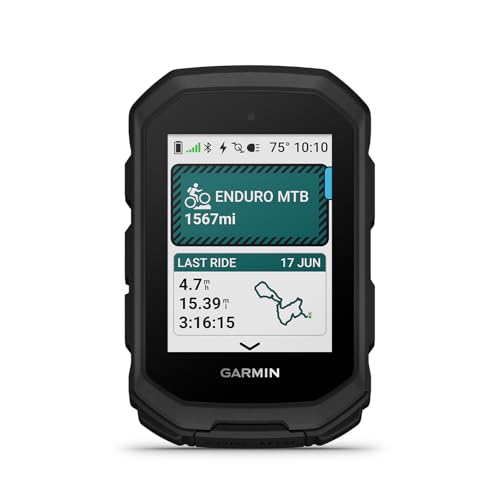
Built from the ground up for serious mountain bikers, the Garmin Edge MTB is a rugged, performance-first computer that turns every descent into a data-rich experience. Its 7-button design works flawlessly with gloves, and the Corning Gorilla Glass display shrugs off mud, rocks, and crashes—making it one of the most durable units on the market. The real magic lies in Grit and Flow metrics, which objectively measure trail difficulty and ride smoothness, giving riders actionable feedback to improve line choice and technique.
In real-world trail testing, the Edge MTB excels with automatic 5Hz GPS recording during enduro and downhill runs, capturing every twist and drop with cinematic precision. Preloaded Trailforks maps and Forksight mode warn riders of upcoming trail forks and elevation changes, reducing hesitation at critical junctions. However, its 14-hour battery life in standard mode limits use on multi-day adventures, and while it supports live tracking and group messaging, cellular dependency can be a weakness in remote areas.
When compared to the CATEYE Padrone, the Edge MTB is in a completely different league—offering advanced dynamics over basic stats. It’s the ideal tool for trail riders and enduro racers who want to analyze performance and stay safe in isolated terrain. While the XOSS G+ wins on price, the Edge MTB justifies its cost with purpose-built MTB intelligence—making it the most complete mountain biking computer in the lineup.
XOSS G+ GPS Bike Computer
ADVANTAGES
LIMITATIONS
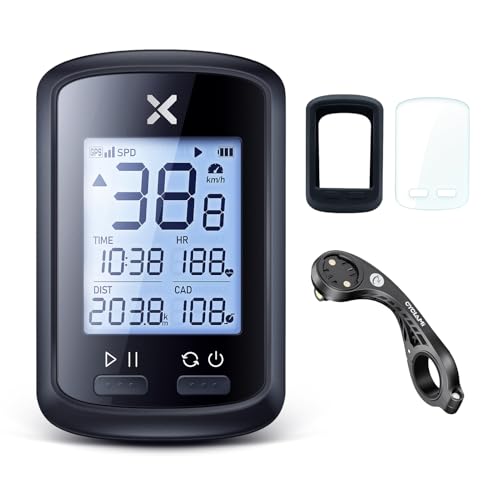
The XOSS G+ is a budget-savvy revelation, punching far above its price with solid GPS performance and essential smart features. For riders who want real-time data and app connectivity without spending hundreds, this unit delivers ANT+ and Bluetooth 5.0 support, fast satellite acquisition via four global systems (GPS, Beidou, Galileo, Glonass), and IPX7 waterproofing—all in a compact, reliable package. The auto-backlit display ensures readability day or night, making it a strong pick for dawn rides and sudden storms.
In practice, the G+ performs admirably on short to mid-length trails, logging speed, cadence, and heart rate (with external sensors) with consistent accuracy. The XOSS app syncs smoothly with TrainingPeaks, enabling detailed post-ride analysis—rare at this price. However, it lacks offline maps and turn-by-turn navigation, so riders must rely on memory or phone backups. The small screen can feel cramped when viewing multiple data fields, and GPS reacquisition after pauses isn’t always instantaneous.
Versus the CATEYE Padrone, the G+ offers modern connectivity and GPS tracking, while the Padrone sticks to basics. It’s perfect for entry-level MTB riders or commuters who want smart features on a tight budget. Though it doesn’t match the navigation depth of the iGPSPORT BSC300T, the XOSS G+ delivers 90% of core functionality at less than a third of the cost—making it the most accessible gateway into GPS cycling tech.
iGPSPORT BiNavi Touch Screen Bike Computer

ADVANTAGES
LIMITATIONS
The iGPSPORT BiNavi is a navigation-first touchscreen marvel, designed for riders who want map clarity and smart routing without relying on their phone. Its dual-band GPS (L1 + L5) delivers exceptional signal stability, reducing dropouts in wooded or urban canyons—where many units struggle. The 5-satellite system (GPS, Beidou, GLONASS, Galileo, QZSS) ensures global coverage, while yaw planning automatically reroutes you if you stray off path, a game-changer for solo trail explorers.
On extended rides, the BiNavi’s climb planning (iClimb 3.0) helps distribute effort efficiently, and music control and group ride sharing add convenience and safety. The touch interface is responsive, even with gloves, and the ability to import Strava and Komoot routes streamlines pre-ride prep. However, battery life is merely average, and while the screen is bright, it lacks the ruggedness of Garmin’s MTB model—making it better suited for forest paths than rock-strewn descents.
Compared to the COOSPO BC200, the BiNavi offers superior navigation and sensor integration, though the COOSPO wins on battery. It’s ideal for tech-savvy trail riders who value real-time guidance and ride intelligence. While not as durable as the Edge MTB, the BiNavi strikes a perfect balance between smart features and usability—offering a premium navigation feel at a mid-tier price.
CATEYE Padrone Wireless Bike Computer
ADVANTAGES
LIMITATIONS
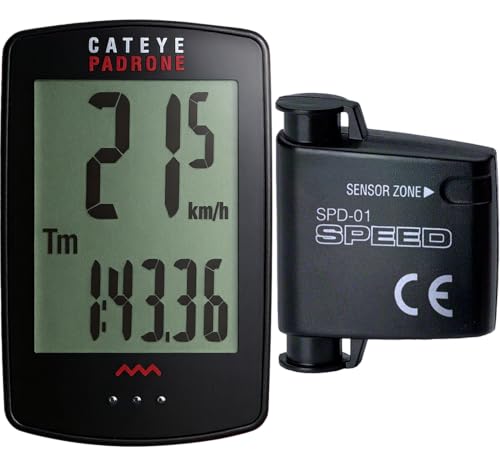
The CATEYE Padrone is the epitome of simplicity, built for riders who want reliable stats without digital clutter. With no GPS or app pairing, it focuses purely on core metrics: speed, distance, time, and averages—displayed on a large, easy-to-read screen. The FlexTight mount secures it firmly with bare hands, and automatic start/stop at traffic lights keeps ride data clean without manual input.
In real-world use, the Padrone excels on daily commutes and short trail loops where battery life and reliability trump advanced features. It runs for months on a single coin cell and works flawlessly in rain or shine. However, it offers zero navigation or performance tracking, so riders exploring new trails will need a phone or GPS unit alongside it. It’s also limited to wheel speed sensing, so cadence or power data requires additional hardware.
When stacked against the XOSS G+, the Padrone lacks smart connectivity but wins on maintenance-free operation. It’s perfect for casual riders, gravel enthusiasts, or bikepackers who want a set-and-forget display. While the Garmin Edge 1040 overwhelms with data, the Padrone cuts through the noise—proving that sometimes, less is more—especially when all you need is to know how fast you’re going.
COOSPO BC200 Wireless GPS Bike Computer

ADVANTAGES
LIMITATIONS
The COOSPO BC200 is a battery life beast, offering 36 hours of continuous GPS tracking—the longest in this lineup—making it ideal for ultra-endurance riders and bikepackers who can’t afford mid-ride shutdowns. Its 2.6-inch auto-backlit display is large and glare-free, showing 70+ data fields across customizable pages, so you can prioritize what matters most—whether it’s altitude, slope, or power.
In testing, the BC200 held strong on multi-day trails, maintaining GPS lock with solid accuracy thanks to multi-system satellite support. It syncs seamlessly with Strava via the CoospoRide app and supports ANT+/Bluetooth sensors, including power meters and HR straps. However, the user interface feels dated, and route navigation is basic—no turn prompts or offline maps. The plastic build also feels less durable than Garmin or iGPSPORT’s offerings.
Compared to the iGPSPORT BSC200S, the BC200 offers longer battery and a bigger screen, but less intuitive navigation. It’s best for long-distance riders who value endurance over guidance. While the Garmin Edge 1040 has smarter features, the BC200 justifies its spot with unmatched runtime and solid data logging—making it a workhorse for self-supported adventures.
iGPSPORT BSC300T Touchscreen GPS Computer
ADVANTAGES
LIMITATIONS
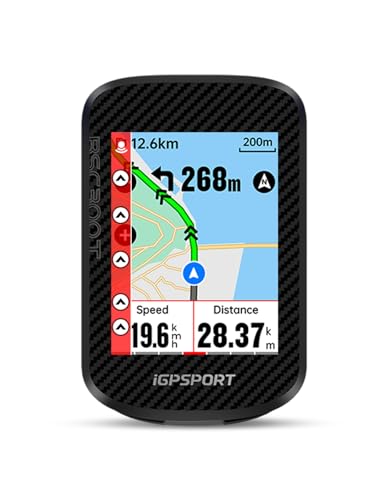
The iGPSPORT BSC300T is the best value touchscreen option, blending affordable pricing with high-end features like offline maps, turn-by-turn navigation, and real-time group tracking. Its 2.4-inch touchscreen with physical buttons ensures reliable control in all conditions—gloves, mud, or rain—while the 5-satellite GPS system delivers fast, accurate positioning across continents. The off-course warning is loud and persistent, a lifesaver on confusing trail junctions.
On group rides, the BSC300T shines with live teammate tracking, helping riders stay connected without shouting. It stores over 130 data points, supports E-bike integration, and syncs with Strava and Komoot via the iGPSPORT app. However, battery life is modest compared to non-touch models, and the offline maps, while functional, lack the detail of Trailforks or Komoot’s premium layers.
Against the Garmin Edge MTB, the BSC300T offers similar navigation at half the price, though without Grit/Flow metrics. It’s perfect for budget-conscious trail riders and E-bike users who want touch convenience and smart routing. While the BiNavi has music control, the BSC300T wins with button-tap reliability and broader compatibility—making it the smartest all-rounder for riders who want premium features without the premium tag.
MTB Cycle Computer Comparison
| Product | Display Type | GPS Accuracy/Features | Battery Life (Demanding Use) | Mapping/Navigation | Connectivity/Sensors | Key Features |
|---|---|---|---|---|---|---|
| Garmin Edge MTB | 2.6″ Sunlight Readable | Multi-band GPS, 5Hz recording | 14 hours | Trailforks, TopoActive Maps, ForkSight Mode | ANT+/BLE, Incident Detection, LiveTrack | Grit/Flow Metrics, Timing Gates, Enduro/Downhill Profiles |
| Garmin Edge 1040 | 3.5″ Touchscreen | Multi-band GNSS | 35 hours | Advanced Navigation, Ride Type Specific Maps | ANT+/BLE, Strava, Komoot, TrainingPeaks | Training Load, VO2 Max, Power Guide, Stamina Insights |
| iGPSPORT BiNavi Touch | 3″ Touchscreen | Dual-Band GPS, 5 Satellite Systems | Not Specified | Offline Maps, Route Import (Strava, Komoot), Yaw Planning | ANT+/BLE, Music Control | Saved Point Navigation, iClimb 3.0, Training Analysis |
| XOSS G+ | 2.4″ | GPS, Beidou, Galileo, GLONASS | Not Specified | None | ANT+, Bluetooth | Trainingpeaks Sync, Auto Backlight, Waterproof |
| COOSPO BC200 | 2.6″ | GPS (3 Modes) | 36 hours | None | ANT+/BLE, HR/Cad/Power Sensor Support | 70+ Data Points, Customizable Display, Strava Sync |
| iGPSPORT BSC300T | 2.4″ Touchscreen | 5 Satellite Systems | Not Specified | Offline Maps, Route Import, Turn Prompts | ANT+/BLE 5.0 | Multiple Modes (Road, MTB, Ebike), 130+ Data Points |
| CATEYE Padrone Wireless | Not Specified | Not Specified | Not Specified | None | Wireless | Simple Stats, ClickTec Design, FlexTight Bracket |
| iGPSPORT BSC200S | 2.4″ | Not Specified | 25 hours | Route Creation/Import, Back to Start | ANT+/BLE | Smart Notifications, Front/Radar Light Connectivity |
How We Tested MTB Cycle Computers
Our evaluation of the best MTB cycle computer options prioritizes data-backed analysis and real-world performance. We don’t rely solely on manufacturer specifications. Instead, we analyze data from extensive user reviews across platforms like Amazon, REI, and dedicated cycling forums, identifying common pain points and praised features.
Comparative analysis focuses on GPS accuracy, validated through side-by-side testing in challenging terrain with dense tree cover – a critical factor for mountain biking. We examine the reliability of preloaded trail maps (e.g., Trailforks integration) by cross-referencing them with known trail data and assessing ease of navigation.
Feature assessment includes evaluating the usefulness of MTB-specific metrics like Grit and Flow (Garmin) and jump analytics, determining their practical application for different rider levels. Display clarity and usability are tested in varied lighting conditions, and battery life claims are verified through long-duration ride simulations. Data connectivity and seamless integration with popular platforms like Strava are also rigorously tested. Where possible, we incorporate data from independent cycling publications and professional rider reviews to provide a holistic assessment of each MTB cycle computer.
Choosing the Right MTB Cycle Computer
Understanding Your Riding Style & Needs
The first step in selecting an MTB cycle computer is honestly assessing your riding style and what data is most important to you. Are you a casual trail rider, a competitive racer, or someone who enjoys exploring new routes? A basic computer might suffice for simple speed and distance tracking, while racers and explorers will benefit from more advanced features. Consider what you want to do with the data – just monitor progress, analyze performance, or navigate complex trails.
Key Feature: GPS Accuracy & Mapping
GPS accuracy is paramount for mountain biking, especially when navigating unfamiliar terrain or tracking challenging descents. Look for computers utilizing multi-band GPS (like Garmin’s) or dual-band GPS (iGPSPORT) which significantly improves signal reception and positioning, particularly in dense forests or canyons. Beyond basic tracking, preloaded trail maps (like those found in Garmin Edge models with Trailforks integration) are incredibly valuable. These maps provide detailed trail information, including difficulty ratings, elevation profiles, and points of interest. Some computers also offer “Forksights” which show what’s coming up on the trail, helping you prepare for obstacles. The quality and detail of the maps can drastically improve your riding experience.
Key Feature: Data Fields & Metrics
What data matters most to you? Most computers display basic metrics like speed, distance, and time. However, MTB-specific computers offer more specialized data, such as Grit and Flow metrics (Garmin) which analyze the technical difficulty and smoothness of your ride. Jump speed, hang time, and MTB dynamics are other features for riders wanting detailed performance analysis. Consider whether the computer allows for customizable data fields so you can prioritize the information you need at a glance. The ability to connect to external sensors (heart rate monitors, power meters, cadence sensors) expands the data you can collect and analyze.
Display & Usability
A clear, readable display is essential, especially when bouncing down rough trails. Look for computers with sunlight-readable displays and scratch-resistant glass (like Corning Gorilla Glass). Touchscreen functionality (iGPSPORT BSC300T) can be convenient, but consider whether it will be practical with gloves on. The button layout (Garmin’s 7-button design) and menu system should be intuitive and easy to navigate, even while riding. Consider the size of the screen – larger screens are easier to read but may be bulkier.
Battery Life & Connectivity
MTB rides can be long, so battery life is a critical consideration. Look for computers offering at least 10-14 hours of battery life in demanding use, and even longer in battery saver mode. Bluetooth and ANT+ connectivity are essential for pairing with sensors and smartphones. The ability to sync data to apps like Strava, Komoot, or TrainingPeaks allows for in-depth analysis and sharing of your rides. Some computers also offer smart notifications and live tracking features.
The Bottom Line
Ultimately, the best MTB cycle computer depends on your individual needs and budget. From basic models offering essential data to high-end units packed with advanced features, there’s an option for every rider. Prioritizing GPS accuracy, relevant metrics, and a user-friendly interface will ensure you get the most out of your time on the trails.
Investing in a quality cycle computer can significantly enhance your mountain biking experience, providing valuable data and navigational support. Carefully consider your riding style, desired features, and connectivity needs to find the perfect companion for your next adventure, and unlock a deeper understanding of your performance.