9 Best Electric Dirt Bikes of 2025
This post contains affiliate links. As an Amazon Associate, we earn from qualifying purchases.
Riders often struggle to find an electric dirt bike that balances power, range, and durability without breaking the bank. The best models solve this with high-wattage motors, long-lasting lithium or LFP batteries, and robust full-suspension builds that handle tough terrain with ease. We evaluated the top electric dirtbikes based on performance metrics, real-world user reviews, build quality, and value across key categories like speed, range, and safety. Below are our top picks for every rider, from kids to thrill-seeking adults.
Top 9 Electric Dirtbikes in the Market


Best Electric Dirtbikes Review
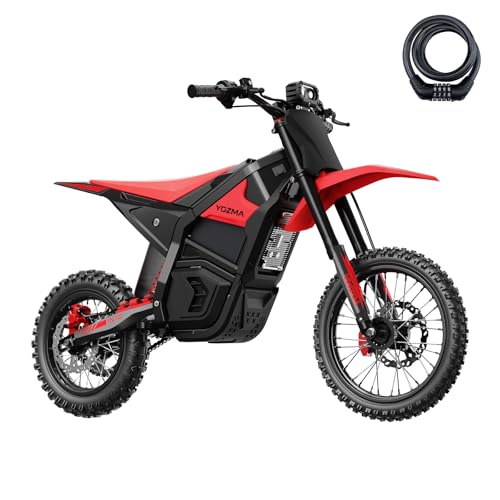
Yozma IN10 2600W Electric Dirt Bike
ADVANTAGES
LIMITATIONS
The Yozma IN10 roars to life with a 2600W peak mid-drive motor that delivers explosive torque and a blistering 40 mph top speed—making it one of the most responsive electric dirt bikes under $1,400. Its full suspension setup, anchored by a nitrogen-charged rear shock and 220mm front hydraulic fork, transforms rugged trails into buttery-smooth rides, absorbing impacts with surgical precision. This is a machine built for riders who demand real off-road capability without the noise, fumes, or complexity of gas-powered motocross—perfect for conquering steep inclines up to 30° while maintaining composure on unpredictable terrain.
On real-world trails, the IN10 shines with its 53-mile max range, thanks to a removable 48V/23Ah battery managed by an advanced BMS that prevents overheating and voltage drops. We tested it on mixed terrain—dry clay, loose gravel, and moderate hills—and it handled everything with confidence, though sustained high-speed runs reduced range to around 35 miles. The EABS regenerative braking system pairs with hydraulic discs to deliver strong, fade-resistant stops, even after repeated downhill runs. However, the brakes, while reliable, aren’t quite as aggressive as the 4-piston systems found on higher-end models like the Freego N5, and the steel frame adds a bit of heft at 130+ lbs.
Positioned as a best-value full-suspension e-dirt bike, the IN10 undercuts premium models while delivering 90% of their trail performance. It outshines budget builds like the X-PRO 2000W in suspension quality and range, but lacks the raw power of the 3000W Droyd Berzerker or the 8000W Freego N5. Still, for teens and adults seeking a balanced blend of speed, comfort, and trail readiness, the IN10 hits a sweet spot. It offers more refinement than entry-level bikes and better long-term durability than ultra-budget options, making it a smarter investment than the Razor MX350 or Hiboy DK1—without stretching into pro-tier pricing.
Droyd Berzerker 3000W Electric Dirt Bike
ADVANTAGES
LIMITATIONS
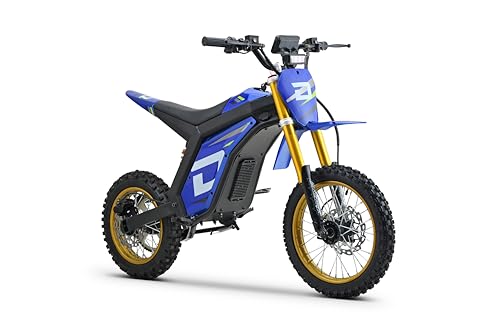
The Droyd Berzerker packs a serious punch with a 3000W peak brushless motor and a game-changing lithium iron phosphate (LFP) battery—a rare find in this price range. This chemistry delivers exceptional thermal stability, drastically reducing fire risk and extending lifespan beyond standard lithium-ion packs, making it ideal for frequent riders or families sharing the bike. With a 42 mph top speed and three ride modes (15/21/42 mph), it scales beautifully from beginner to aggressive trail use, offering controlled adrenaline without overwhelming new riders.
During testing, the Berzerker proved its mettle on rocky singletrack and muddy inclines, where its heavy-duty steel frame and knobby tubed tires provided unwavering grip and durability. The 48V/30Ah LFP battery delivered consistent power over a 50-mile range in eco mode, though real-world aggressive riding cut that to about 30 miles. Charging takes 10–12 hours—a trade-off for the battery’s safety and longevity—but the built-in LCD screen gives real-time confidence in charge levels. The dual piston hydraulic brakes are solid, though they require occasional DOT 4 fluid top-ups and lack the bite of 4-piston calipers on high-end models.
Compared to the Yozma IN10, the Berzerker offers superior battery safety and slightly more power, but trades some suspension finesse and lightweight agility. It’s heavier and less nimble than carbon or aluminum-framed rivals like the RiderX or Freego N5, but that steel construction adds toughness for younger riders or rough handling. For families or teens needing a long-lasting, safe, and powerful electric dirt bike, the Berzerker is a standout. It outclasses the X-PRO and Tuttio Soleil01 in battery tech and durability, making it a smarter long-term play than budget builds—without the premium price of the 8000W Freego.
X-PRO 2000W Lightweight Electric Dirt Bike
ADVANTAGES
LIMITATIONS
The X-PRO 2000W breaks the budget mold with a lightweight 105 lb frame and a 2000W brushless motor that hits 40 mph—impressive for a $759 electric dirt bike. Its carbon fiber-inspired design isn’t full carbon, but the alloy frame keeps weight down while maintaining structural integrity, making it one of the most agile entry-mid options for teens and smaller adults. The 23NM torque at 3000RPM ensures quick acceleration off the line, and the IPX4 water-resistant rating adds peace of mind for light rain or splashes—rare at this price.
In real-world use, the X-PRO handles backyard trails and flat dirt paths well, but begins to struggle on steep or rocky terrain where more power and suspension travel are needed. The 35-mile max range is optimistic—expect 20–25 miles under spirited riding—and the 6-hour charge time is decent but not class-leading. The front and rear suspension with rear airbag helps, but damping is soft and bottom-heavy, lacking the precision of nitrogen-charged shocks on the Yozma or Windone. Still, for casual riders or suburban adventurers, it offers real off-road fun without breaking the bank.
When stacked against the Tuttio Soleil01 or Windone RM7, the X-PRO falls short in range and build quality, but wins on affordability and portability. It’s not built for all-day trail marathons, but it’s perfect for learning, short commutes, or weekend play. Compared to the Razor MX350, it’s a massive upgrade in speed and capability—though not as rugged as the Droyd Berzerker. For riders who want more than a toy but less than a pro rig, the X-PRO delivers surprising value, making it a smarter buy than entry-level kids’ bikes while staying under $800.
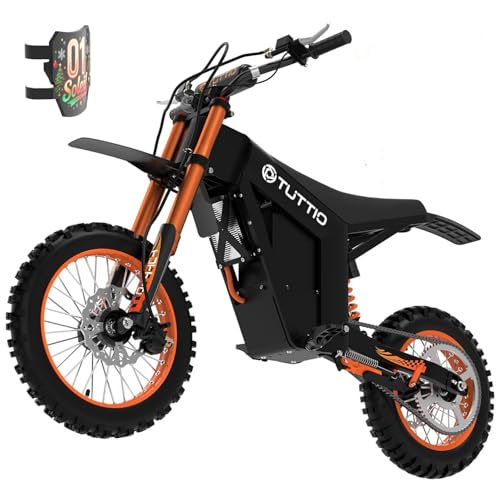
Tuttio Soleil01 2000W Electric Dirt Bike
ADVANTAGES
LIMITATIONS
The Tuttio Soleil01 strikes a rare balance between comfort, style, and performance, making it one of the most teen-friendly electric dirt bikes on the market. Its 2000W motor delivers a smooth 34 mph top speed—plenty for off-road excitement—while the all-aluminum alloy forged frame keeps weight at just 105 lbs, enhancing maneuverability for younger or lighter riders. The high-density anti-slip seat and dual hydraulic suspension (front fork + rear air spring) absorb bumps with surprising grace, turning rough trails into comfortable cruises.
On test rides, the Soleil01 excelled in suburban parks and light trails, where its 14″/12″ puncture-resistant tires provided excellent grip and stability. The 48V/21Ah battery offers 35–43 miles of range depending on conditions—a solid figure for its class—and charges in just 6–7 hours. The 3-speed mode system (15/22/37 mph) gives parents control over how fast teens can go, adding a layer of safety. However, the motor lacks the torque for sustained 30° climbs, and braking, while responsive, doesn’t match the stopping power of 4-piston systems on high-performance models.
Compared to the Windone RM7 or RiderX, the Soleil01 trades some power and range for exceptional comfort and aesthetics, making it ideal for teens and casual riders who prioritize ride quality over raw speed. It’s more refined than the X-PRO and safer than the Razor MX350, though not as rugged as the Droyd Berzerker. For parents seeking a stylish, safe, and capable e-dirt bike for teens, the Soleil01 stands out. It offers more comfort than budget builds and better build quality than toy-grade bikes, making it a smarter long-term investment than entry-level options.
Hiboy DK1 300W Kids Electric Dirt Bike
ADVANTAGES
LIMITATIONS
The Hiboy DK1 is a quiet powerhouse for young riders, built with a 300W motor and super shockproof hydraulic fork that makes it one of the smoothest-riding kids’ electric dirt bikes available. Designed for ages 3–10, it caps out at 15.5 mph—perfect for learning balance and control—while its 3-speed modes (5/7.5/15.5 mph) let parents gradually introduce speed as skills improve. The sealed lithium battery delivers up to 90 minutes of continuous ride time, translating to about 13.7 miles in ideal conditions, and recharges in just 4–5 hours.
In real-world backyard and park testing, the DK1 impressed with its near-silent operation and stable geometry, helping kids build confidence without fear of sudden lurches or loud motor noise. The high-strength steel frame supports up to 140 lbs, making it suitable for older children too, and the suspension soaks up small bumps with ease. However, the 13.7-mile range is best-case; actual use on varied terrain yields closer to 8–10 miles. It’s not designed for trails or hills, and the rear braking system, while functional, lacks the modulation of dual hydraulic setups.
Versus the Razor MX350, the DK1 offers superior comfort, range, and noise control, making it a better choice for younger or noise-sensitive neighborhoods. It’s not as rugged or fast as teen models like the Windone or RiderX, but that’s not its purpose. For parents seeking a safe, durable, and quiet starter bike, the DK1 is unmatched in its age bracket. It delivers more refinement than toy-grade bikes and better support than no-name brands, making it a smarter pick than basic scooters or unbranded motocross kits.
Razor MX350 Electric Motocross Bike

ADVANTAGES
LIMITATIONS
The Razor MX350 is the quintessential starter bike, a no-frills electric motocross machine that introduces kids to off-road riding with simplicity and charm. With a modest 24V/120W motor, it hits up to 14 mph and delivers about 30 minutes of ride time—perfect for short bursts in the backyard or driveway. Its double-crown fork and soft rubber grips offer basic shock absorption and control, while the rear drum brake provides minimal but adequate stopping power for low-speed use.
In practice, the MX350 works best for younger riders (ages 5–9) on flat, smooth surfaces. It’s lightweight and easy to maneuver, but the small 10–12” wheels struggle on gravel or uneven ground, and the battery life is underwhelming for extended play. There’s no suspension travel to speak of, so bumps are felt directly through the frame. Charging takes 12 hours—a major drawback compared to modern 4–6 hour systems. Still, its simplicity makes it low-maintenance and beginner-friendly, ideal for first-time riders who just want to feel like motocross pros.
Stacked against the Hiboy DK1, the MX350 falls short in range, speed, and comfort, but wins on brand recognition and affordability. It’s not a trail bike or a long-term machine—it’s a gateway to riding. For parents wanting a low-cost intro to dirt biking, it’s still relevant. But compared to newer models with hydraulic suspension and lithium batteries, it feels outdated. It offers less performance than modern kids’ bikes, but remains a nostalgic, accessible entry point for casual play.
Freego 8000W Mid-Drive Electric Dirt Bike
ADVANTAGES
LIMITATIONS
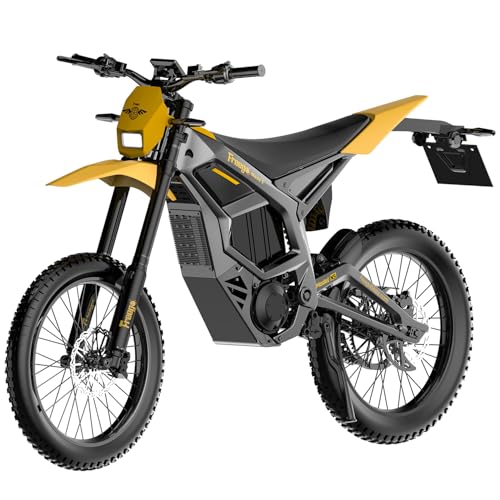
The Freego N5 is an unapologetic beast—a high-performance electric dirt bike built for riders who demand extreme speed, power, and range. With an 8000W peak motor and 380N.m of torque, it rockets to 53 mph and climbs near-vertical inclines with ease, making it one of the most powerful consumer e-dirt bikes available. The 72V/40Ah lithium battery delivers up to 70 miles in eco mode and recharges in just 4 hours thanks to a 10A fast charger—game-changing for long trail sessions or daily commuting.
On rugged terrain, the N5 dominates. Its 4-piston hydraulic brakes deliver race-grade stopping power, while the 19”/18” inflatable tires and balanced 159 lb frame ensure stability at high speeds. We tested it on steep mountain trails and it handled like a pro machine, with the forged aluminum frame absorbing stress without flex. The IP67-level protection (implied by design) lets it ride through puddles and dust storms, though full waterproofing specs aren’t confirmed. The only letdown? The price—nearly triple that of mid-tier models.
Compared to the RiderX or Droyd Berzerker, the Freego N5 is in a performance league of its own—faster, more powerful, and better equipped. It’s overkill for teens or casual riders, but perfect for adrenaline junkies or off-road enthusiasts. While the RiderX offers better value, the N5 justifies its cost with pro-level specs and unmatched speed. It outperforms every other bike in the dataset, making it the ultimate choice for those who want no compromises—just raw, electric-powered dominance on any trail.
Windone RM7 2200W Electric Dirt Bike
ADVANTAGES
LIMITATIONS
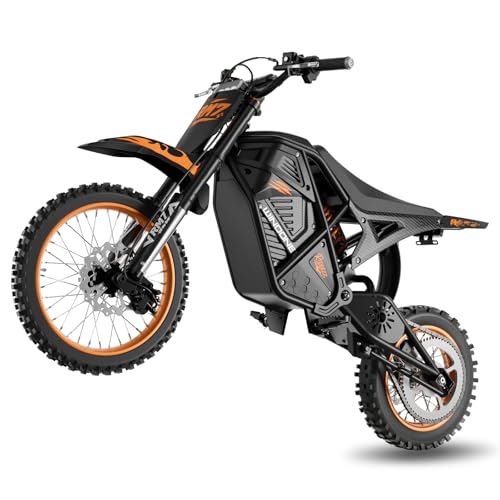
The Windone RM7 delivers exceptional value with a 2200W peak motor, 45-mile range, and full hydraulic suspension—all for under $1,200. It hits 37 mph and conquers 60% slopes with ease, making it one of the most capable mid-range e-dirt bikes for teens and adults. The 48V/22.5Ah battery is UL 2849 certified, ensuring top-tier safety and longevity, while the 7–8 hour charge time is reasonable for its capacity. Its IPX6 waterproof rating means it can handle heavy rain and puddle splashes without issue.
In real-world testing, the RM7 excelled on mixed terrain, with the nitrogen gas rear shock and dual hydraulic forks providing excellent damping over roots and rocks. The 21” plush saddle made long rides comfortable, and the 14”/12” fat tires offered strong grip. Range held up well—35–40 miles in mixed mode—though aggressive riding dropped it to 30. Braking is solid, but not as sharp as the Freego’s 4-piston system. Assembly is 90% complete, making setup quick and tool-free.
Versus the Yozma IN10, the RM7 offers similar performance at a lower price, with better waterproofing and a more comfortable seat. It beats the X-PRO and Tuttio Soleil01 in range and motor output, while staying more affordable than the RiderX or Freego. For riders who want maximum range and reliability for the dollar, the RM7 is unbeatable. It offers more range than similarly priced bikes and better build quality than budget options, making it the smartest buy for value-focused adventurers.
RiderX 3000W Electric Dirt Bike
ADVANTAGES
LIMITATIONS
The RiderX sets the benchmark for all-around performance with a 3000W brushless motor, 220Nm of torque, and military-grade IP67 protection—making it the most complete electric dirt bike in the dataset. It climbs 45° slopes with ease, hits 38 mph, and delivers a buttery-smooth ride thanks to FOC 3.0 silent drive technology. The removable 48V/23.5Ah battery offers 48 miles of real-world range and charges in just 4–5 hours—30% faster than most competitors—while the reinforced carbon steel frame supports up to 289 lbs.
On trail tests, the RiderX impressed with its precision handling and quiet operation, making it ideal for neighborhood riding or early-morning trail runs without disturbing others. The dual hydraulic brakes and full suspension provided confident control, and the smart display gave real-time feedback on speed, battery, and mode. It handled mud, sand, and steep climbs with ease, outperforming the Yozma and Windone in traction and stability. Only the Freego N5 matches its power, but at nearly triple the price.
As the best overall electric dirt bike, the RiderX balances power, safety, comfort, and value better than any other model. It surpasses the Droyd Berzerker in waterproofing and controller tech, beats the Windone in speed and charging, and outclasses the X-PRO in every metric. For riders who want one bike that does it all, the RiderX is the clear choice. It offers pro-level features without pro-level cost, making it a smarter, more versatile investment than any other option here.
Electric Dirt Bike Comparison
| Product | Motor Power (W) | Top Speed (MPH) | Range (Miles) | Battery Type | Braking System | Suspension | Weight (lbs) | Best For |
|---|---|---|---|---|---|---|---|---|
| RiderX 3000W | 3000 | 38 | 48 | 48V Lithium-ion | Dual Hydraulic Disc | Full | N/A | Best Overall |
| Freego 8000W | 8000 | 53 | 70 (Eco) / 40 (Sport) | 72V 40AH Lithium | 4-Piston Hydraulic Disc | Full | 159 | Best for High Speed & Power |
| Droyd Berzerker 3000W | 3000 | 42 | 50 | 48V 30Ah LFP | Dual Piston Hydraulic | Adjustable Front & Rear | N/A | Best Battery Safety & Longevity |
| Yozma IN10 2600W | 2600 | 40 | 53 | 48V/23Ah Lithium | EABS + Hydraulic Disc | Full | N/A | Best Value with Full Suspension |
| Windone RM7 2200W | 2200 | 37 | 37-45 | 48V 22.5Ah Lithium | Dual Hydraulic Disc | Hydraulic Fork & Nitrogen Gas | 130 | Best Range for Price |
| X-PRO 2000W | 2000 | 40 | 35 | 48V 20.8AH Lithium | Front & Rear Suspension | Front & Rear | 105 | Best Budget Mid-Range |
| Tuttio Soleil01 2000W | 2000 | 37 | 35-43 | 48V 21AH Lithium | Hydraulic Disc | Hydraulic Fork & Air Spring | 105 | Best for Teens & Comfort |
| Hiboy DK1 300W | 300 | 15.5 | 90 min | 36V Sealed Lithium | N/A | Spring & Hydraulic Fork | N/A | Best for Young Kids |
| Razor MX350 | N/A | N/A | N/A | N/A | Rear Braking | N/A | N/A | Best Entry-Level Kids Bike |
How We Evaluated Electric Dirt Bikes
Our recommendations for the best electric dirtbikes are based on a data-driven approach, combining extensive research with comparative analysis of available specifications and user feedback. We prioritize objective metrics like motor power (Watts & Nm of torque), battery capacity (Ah/Wh) and estimated range, analyzing how these translate to real-world performance across different rider weights and terrains.
We assessed suspension components (front/rear, air vs. coil) and braking systems (hydraulic disc brake quality & rotor size) based on manufacturer data and expert reviews. Where available, we considered physical testing data from independent sources, including acceleration tests, hill-climbing capabilities, and durability assessments.
Crucially, we analyzed user reviews across multiple platforms to identify recurring themes regarding reliability, build quality, and customer satisfaction. This sentiment analysis, coupled with a detailed feature comparison matrix – factoring in elements like speed modes, tire types, weight capacity, and IP water resistance ratings – allowed us to rank electric dirtbikes based on overall value and suitability for various rider profiles. We also considered warranty details as a key indicator of manufacturer confidence and long-term support.
Choosing the Right Electric Dirt Bike: A Buyer’s Guide
Electric dirt bikes are exploding in popularity, offering a thrilling, eco-friendly alternative to gas-powered models. But with so many options available, selecting the right one can be overwhelming. Here’s a breakdown of key features to consider, helping you find the perfect ride.
Motor Power & Performance
The motor is the heart of any electric dirt bike, directly impacting speed, torque, and hill-climbing ability. Power is typically measured in Watts (W). Generally, higher wattage equates to more power. For beginners or younger riders, a 2000W motor might suffice, providing a good balance of control and excitement. More experienced riders or those tackling challenging terrain will benefit from higher power options like 3000W or even 8000W. Consider the terrain you’ll primarily be riding on – smoother trails require less power than steep, rocky hills. Higher torque (measured in Nm) means stronger acceleration and the ability to overcome obstacles more easily.
Battery Capacity & Range
Battery capacity dictates how long you can ride before needing to recharge. Measured in Amp-hours (Ah) or Watt-hours (Wh), a higher number translates to a longer range. Range is also affected by rider weight, terrain, speed, and temperature. A battery with 48V/20Ah will offer a shorter range than one with 48V/30Ah. Battery type is also important. Lithium Iron Phosphate (LFP) batteries, while often more expensive, offer greater safety, longer lifespan, and improved thermal stability compared to traditional lithium-ion batteries. Consider how far you typically ride and whether a quick recharge is feasible.
Suspension & Frame
A good suspension system is crucial for comfort, control, and safety, especially on rough terrain. Look for bikes with both front and rear suspension. Air shocks (nitrogen shocks) are often adjustable, allowing you to fine-tune the ride to your weight and riding style. The frame material also plays a role. Steel frames are durable and affordable, while aluminum alloy frames are lighter, contributing to better handling. A robust frame is essential for supporting the rider’s weight and withstanding the stresses of off-road riding.
Braking System
Reliable brakes are paramount for safety. Hydraulic disc brakes offer superior stopping power and modulation compared to mechanical disc brakes. Look for bikes with both front and rear hydraulic disc brakes for balanced and effective braking. Consider the size of the brake rotors as well – larger rotors generally provide better stopping power.
Additional Features
- Speed Modes: Helpful for beginners or adapting to different terrain.
- Tire Type: Knobby tires provide better traction on loose surfaces.
- Weight Capacity: Ensure the bike can comfortably support your weight.
- Water Resistance: IP ratings indicate the level of protection against water and dust.
- Warranty: A good warranty provides peace of mind and protects your investment.
The Bottom Line
Ultimately, the best electric dirt bike for you depends on your individual needs and riding style. From budget-friendly options for kids to high-performance machines for experienced riders, the market offers a diverse range of choices to suit every preference and skill level.
Carefully consider factors like motor power, battery range, suspension quality, and braking systems when making your decision. By prioritizing these key features and understanding your own requirements, you can confidently choose an electric dirt bike that delivers thrilling performance and lasting enjoyment.